

The NAHQ Healthcare Quality Competency Framework™
If we are to achieve our highest aspirations of excellence in healthcare Quality & Safety, we must do it together. Coordinated. Speaking the same language. Aligned to the same goals. The NAHQ Framework is what enables us, as a workforce, to do this. It serves as THE industry standard, defining the knowledge, competencies and skills required to advance Quality & Safety across the entire healthcare continuum.

Want to follow the Framework? NAHQ can lead the way.
The Framework is at the core of all of NAHQ’s offerings. Whether you are an individual looking for the most relevant training and certifications or an organization seeking to optimize your workforce, NAHQ can help you follow the Framework and leverage the full power of Quality to advance your career and your organizational goals.
Discover the Healthcare Quality Competency Framework
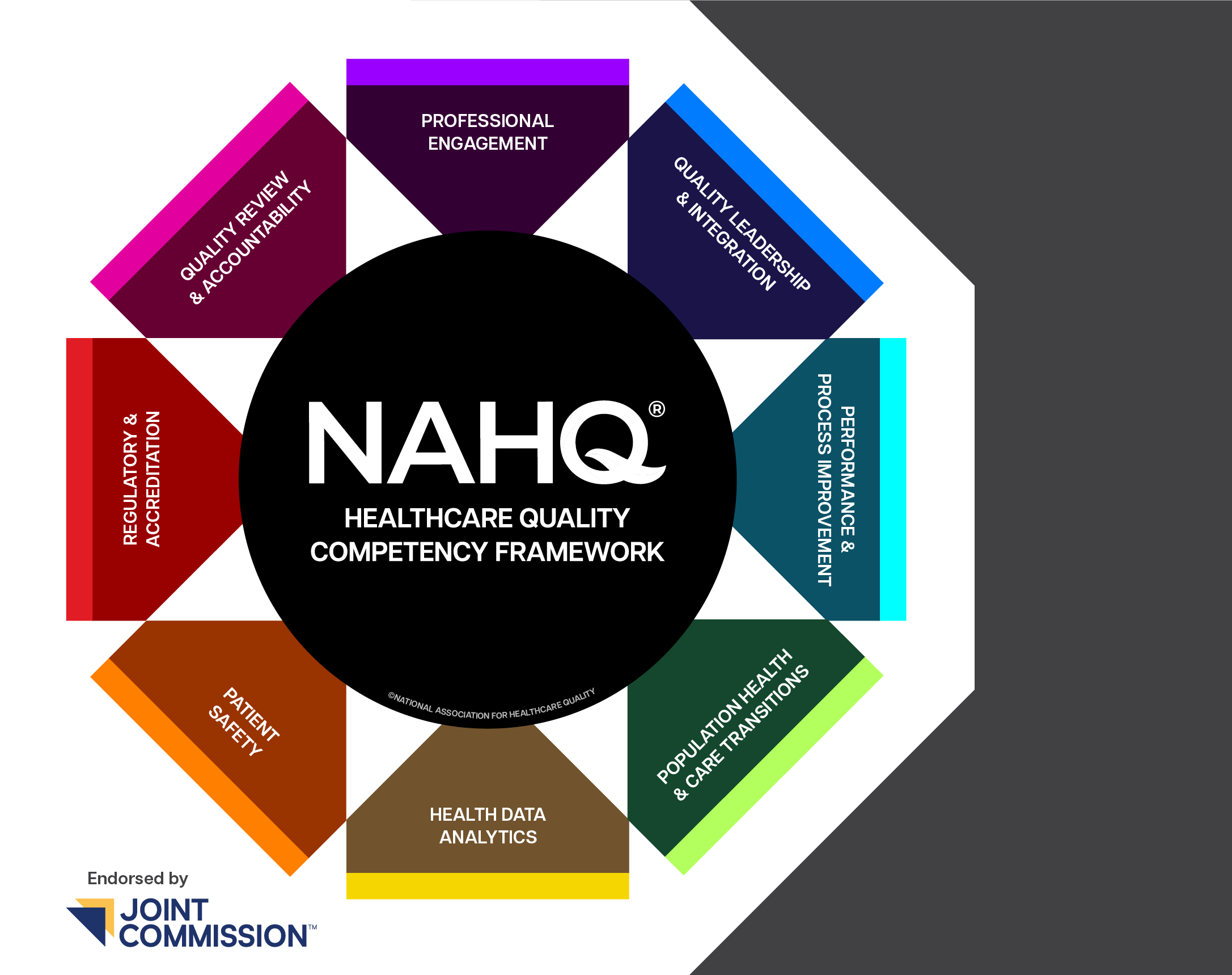
Click on each section to learn more
Created by experts, informed by data, and continuously updated and validated, the framework represents:
- 8 domains and 28 competencies available to all, as well as skill statements accessible through select NAHQ programming
- A common vocabulary, knowledge and toolset, ensuring the workforce is aligned across the healthcare continuum for everyone who plays a role in Quality & Safety (which is everyone in healthcare!)
Quality Review & Accountability
Direct the activities that impact organizational reimbursement, public reporting and support compliance with organization-wide voluntary, mandatory, and contractual requirements.
COMPETENCY STATEMENTS:
- Relate payment models and the impact of healthcare quality, safety, and patient experience initiatives to organizational reimbursement.
- Create and implement a plan to meet measure reporting requirements for quality, safety, regulatory and patient experience.
- Facilitate physician and clinical provider performance review activities.
Regulatory & Accreditation
Direct organization-wide processes for evaluating, monitoring, and improving compliance with internal and external regulatory requirements. Lead the organization’s processes to prepare for, participate in, and follow up on regulatory, accreditation, certification surveys and complaint/grievance activities.
COMPETENCY STATEMENTS:
- Operationalize processes to support compliance with regulations and standards.
- Facilitate continuous survey readiness activities.
- Lead the organization through survey processes, findings, and plan of corrections.
Patient Safety
Cultivate a safe healthcare environment by promoting safe practices, a safety culture, and improving processes that detect, mitigate or prevent harm. Safety is to be a core value for the organization, which includes the effective and equitable engagement of patients and their families, caregivers, and the clinical teams.
COMPETENCY STATEMENTS:
- Assess the organization’s safety culture and safety practices.
- Apply safety science principles and methods to healthcare quality and safety work, leveraging safety curriculum and competencies to promote teamwork.
- Use organizational procedures to identify and report patient and workplace safety risks and events.
- Collaborate with internal and external stakeholders to analyze safety risks and events to improve processes.
Health Data Analytics
Leverage the organization’s analytic capabilities to help guide data-driven decision-making and inform quality and safety improvement initiatives. An organization’s health data analytics responsibilities may reside in multiple functional areas, require cross-functional coordination, and can directly impact quality, safety, and patient experience measurement.
COMPETENCY STATEMENTS:
- Apply procedures for the management of data and systems.
- Design data collection and data analysis plans to support quality, safety, regulatory and patient experience work activities.
- Integrate data from internal and external source systems to support quality, safety, regulatory, and patient experience.
- Use statistical and visualization methods to transform data into information.
Population Health & Care Transitions
Evaluate and improve healthcare processes and care transitions to advance the efficient, effective, timely, equitable, and safe care of individuals and defined populations across the continuum.
COMPETENCY STATEMENTS:
- Integrate population health strategies into quality and safety work.
- Apply a patient-centered, holistic approach to drive and monitor improvement.
- Collaborate with stakeholders to improve care processes and transitions for safe and effective care delivery across the continuum.
Performance & Process Improvement
Use performance and process improvement (PPI), project management, and change management methods to support quality and safety initiatives (e.g., clinical, operational, patient experience, workforce safety) to improve and sustain performance and achieve organizational goals.
COMPETENCY STATEMENTS:
- Implement standard performance and process improvement (PPI) methods into individual, team and project work activities.
- Apply project management methods to regular work activities.
- Use change management principles and tools for improvement projects and initiatives.
Quality Leadership & Integration
Advance the organization’s commitment to healthcare quality and safety through collaboration, learning opportunities, and communication. Lead the integration of quality and safety into the organization's fabric through a coordinated infrastructure to achieve organizational objectives.
COMPETENCY STATEMENTS:
- Direct the quality and safety infrastructure to achieve organizational objectives.
- Apply procedures to regulate the use of privileged or confidential information.
- Integrate stakeholder feedback into the quality and safety infrastructure and foster interprofessional teamwork.
- Create learning opportunities to advance healthcare quality and safety throughout the organization.
- Communicate effectively with different audiences to achieve quality and safety goals.
Professional Engagement
Advance healthcare quality and safety with a commitment to practicing ethically and enhancing one’s competence to advance the discipline.
COMPETENCY STATEMENTS:
- Integrate ethical standards into professional practice that support healthcare quality and safety.
- Engage in lifelong learning that supports healthcare quality and safety.
- Participate in activities that advance healthcare quality and safety practices.
To download the Framework now, please complete this form.
NAHQ’s Healthcare Quality Competency Framework is copyrighted. © 2026 National Association for Healthcare Quality
NAHQ’s Healthcare Quality Competency Framework is protected by copyright and is subject to NAHQ’s Terms of Use and Intellectual Property Permissions Policy. Unauthorized use is prohibited.
Recognized by industry leaders as the industry standard.
The Framework is published in the Journal of Healthcare Quality, endorsed by Joint Commission and widely adopted by healthcare organizations, care delivery settings, and higher‑education programs across the world.
Proven impact for organizations.
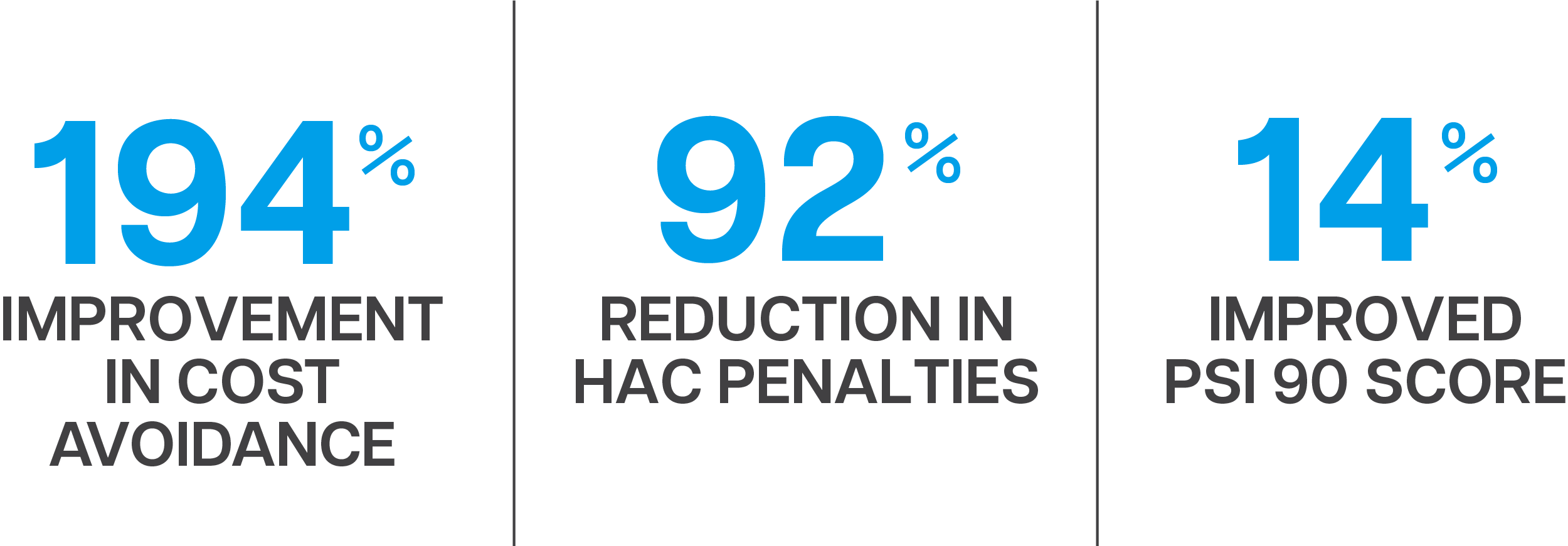
Organizations that work with NAHQ to activate the Framework have achieved reduced variability, improved Quality & Safety outcomes and positive ROI.
Peer reviewed articles about the Healthcare Quality Competency Framework
Why Competency Standardization Matters for Improvement: An Assessment of the Healthcare Quality Workforce
Healthcare transformation requires a healthcare quality workforce with the requisite expertise to lead, oversee, and implement positive change within …
Source: Journal for Healthcare Quality, September/October 2021
Workforce Competencies for Healthcare Quality Professionals: Leading Quality-Driven Healthcare
As healthcare delivery systems increasingly adopt models designed to reward cost-efficient and high-quality care, the demand for expertise in …
NAHQ Competency Framework Updates Complete; Reflections on Maturity for Field of Healthcare Quality
Many of the organizations I speak with are navigating the same challenge: healthcare quality priorities and pressures have evolved dramatically …

Why the Framework is needed now more than ever.
Healthcare is operating in an increasingly complex, high-risk, low-margin environment. NAHQ’s Competency Framework defines the workforce capabilities health systems need today to address pressing concerns from financial pressures and workforce demands to rural health and access, value-based care, AI and other digital innovations, and more.
When leaders and organizations are called upon to protect margins, meet rising Quality expectations, succeed under value-based care, and maintain an agile, capable workforce, the Framework can provide the roadmap to success.
The history behind the Healthcare Quality Competency Framework
Today, the Framework is the industry standard for Quality competencies, defining the full spectrum of knowledge, skills and behaviors required for achieving Quality excellence. In 2016, however, there was not yet a common definition, much less common standard, for Quality competencies. As the global authority in healthcare Quality & Safety, NAHQ recognized the urgency of the need and set out to create the detailed, in-depth Framework that was required to achieve our highest aspirations in healthcare – Quality, Safety and Value.
We created the Healthcare Quality Competency Framework in three phases and now provide updates as needed to ensure it is always reflective to today’s needs.
Content development
First, we assembled a team of experts representing all areas of healthcare Quality & Safety to develop NAHQ’s Healthcare Quality Competency Framework. They received support from a PhD-educated consultant and six internal work groups who together developed and vetted content.
The original Framework consisted of 8 domains, 29 competencies and 486 skills, categorized into three proficiency levels: foundational, proficient and advanced.
Content evaluation
Once created, NAHQ’s Healthcare Quality Competency Framework was formally evaluated by top authorities in the field. This review and validation process was designed to ensure that the Framework represented the work that leaders thought should be activated by healthcare Quality professionals across the continuum of care.
User evaluation
After the Framework was validated by leaders in the field, NAHQ set out to confirm that the industry’s workforce itself agreed that the Framework reflected current and aspirational states of their work and necessary competencies to deliver on healthcare Quality & Safety goals. The result? The industry’s workforce also validated the Framework, and in the process of that, NAHQ also validated the professional assessment instrument NAHQ uses today to activate Workforce Accelerator®.
Once these steps were taken, the Framework was published in the Journal for Healthcare Quality and has been republished there multiple times.
ONGOING
In February 2026, the first Framework refresh was released. Updates were informed by extensive input from Quality professionals and the industry, interviews with executive leaders across diverse healthcare organizations, a comprehensive literature review and research process, and review and refinement by a panel of subject matter experts. PhD researchers were also included to ensure that the integrity of the Framework validation and professional assessment were maintained. Frequent evaluation will continue on an ongoing basis to ensure the Framework remains aligned with industry expectations and real-world practice.

*Required fields
Download the Healthcare Quality Competency Framework
Thank you for your interest in the Healthcare Quality Competency Framework.
The HQCF serves as the industry standard defining the spectrum of work required for a high functioning quality program to achieve Quality, Safety and Value.


